
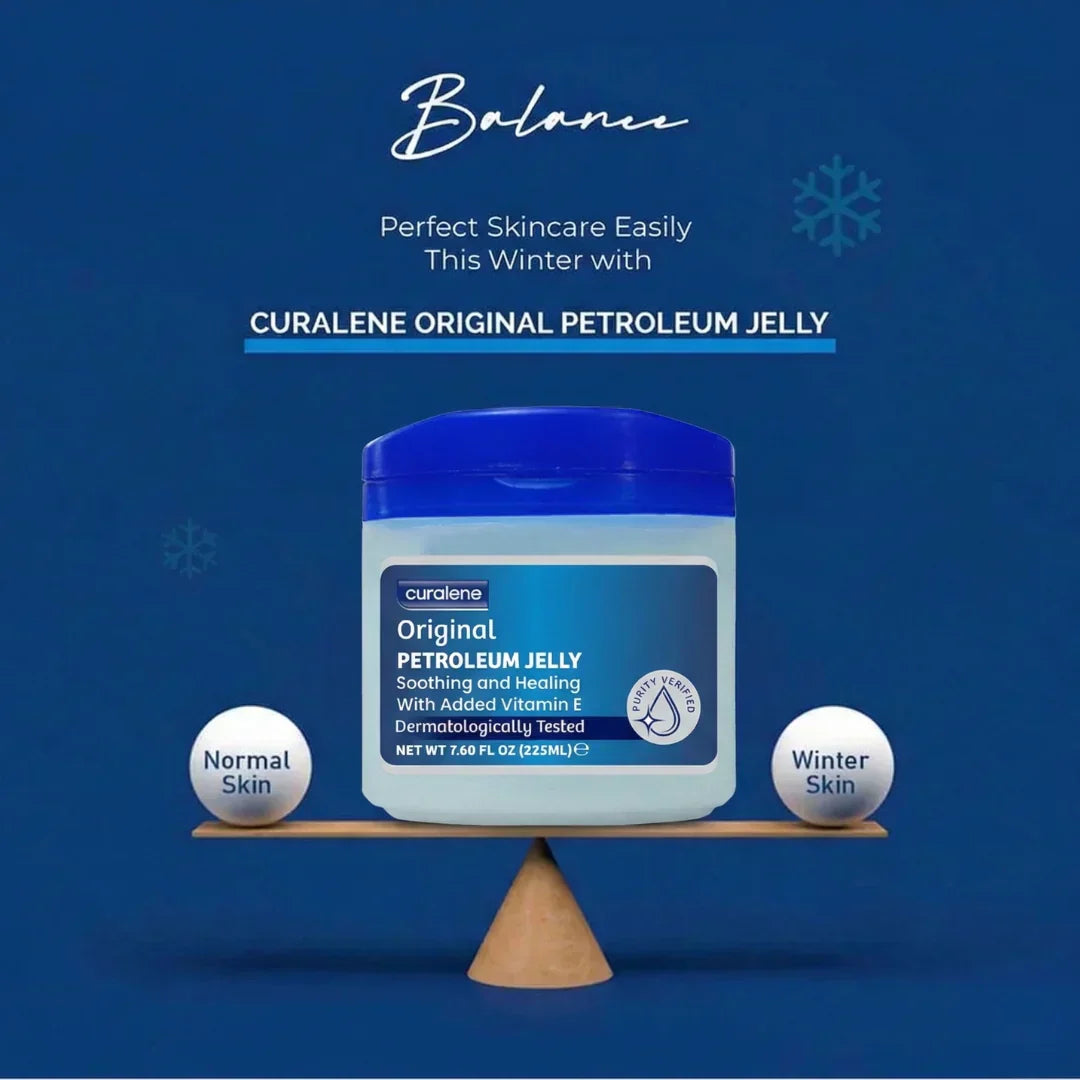
If your For You page has been full of people smearing a thick, glossy layer of jelly over their face before bed, you've already met "slugging." It looks unusual, it definitely isn't glamorous, but it's fast becoming one of the most talked about skincare habits in the UK and unlike most viral trends, this one is backed by something dermatologists have recommended for decades: petroleum jelly.
Here at Curalene, we've been formulating petroleum jelly for sensitive, dry and easily irritated skin for years, so we thought it was time to explain exactly what slugging is, why it works, and how to do it properly at home.
What Is Slugging?
Slugging is the final step of a night-time skincare routine. After cleansing and applying your usual serums or moisturiser, you seal everything in with a thin layer of petroleum jelly. Left on overnight, it forms an occlusive barrier on the surface of the skin, which simply means it stops moisture from evaporating away while you sleep.
The name comes from the trail of shine left behind not the most elegant image, but the results speak for themselves. Skin tends to look plumper, feel softer, and lose that tight, flaky sensation that so many of us wake up with, particularly during colder months or after a long day indoors with the heating on.
Why Is Slugging Trending in the UK Right Now?
A few things have come together at once. British weather is famously unkind to skin damp, windy days followed by dry, centrally heated evenings play havoc with the skin barrier all year round, not just in winter. At the same time, there's a broader shift happening in UK skincare towards simpler routines built around fewer, genuinely effective products, rather than ten-step regimens.
Slugging fits neatly into both. It's a single step, it works with whatever routine you already have, and it uses a product most British households have kept in the bathroom cabinet for generations. It's less a new invention and more an old favourite getting the recognition it deserves.
The Skin Science Behind It
Skin loses water constantly through a natural process called transepidermal water loss. When your skin barrier is compromised from weather, central heating, over-cleansing or harsh actives that water loss speeds up, leaving skin dry, tight and flaky. An occlusive layer such as petroleum jelly slows this process down considerably, giving your skin the time and conditions it needs to repair itself overnight.
This is why petroleum jelly has been a staple of dermatology for so long. It isn't flashy, and it doesn't claim to contain the latest trending ingredient, but it does one job extremely well: helping skin hold onto the moisture it already has.
How to Add Slugging to Your Routine
- Cleanse your skin as normal. Slugging works best on clean skin sealing in the day's dirt or make-up isn't the goal.
- Apply your usual moisturiser or facial oil and give it a minute or two to sink in properly.
- Warm a small amount of petroleum jelly between your fingertips before applying, which makes it far easier to spread thinly.
- Smooth a thin layer over your face, or just the drier areas around the cheeks, nose and chin if you'd rather ease in gently.
- Leave it on overnight and cleanse away in the morning with your usual routine.
Two or three nights a week is a sensible starting point. Those with very dry or weather-worn skin may find nightly use suits them better, while oilier or blemish prone skin types are often better off spot-treating just the driest patches rather than applying a full face layer.
Choosing the Best Petroleum Jelly for Dry Skin in the UK
Not every jar of petroleum jelly is formulated the same way, and texture makes a real difference when you're using it as an overnight seal. At Curalene, our petroleum jelly range has been designed with exactly this in mind:
- Original Petroleum Jelly — a pure, fragrance-conscious formula ideal for anyone wanting a straightforward occlusive layer.
- Coconut Petroleum Jelly — a slightly richer texture with a light natural scent, well suited to normal-to-dry skin.
- Cocoa Butter Petroleum Jelly — a more emollient option, popular with those dealing with particularly dry or mature skin.
- Aloe Vera Petroleum Jelly — a gentler formulation for reactive, sun-exposed or easily irritated skin.
Whichever you choose, the same principle applies: a thin layer goes much further than a thick one, and consistency matters more than quantity.
More Than Just a Face Routine: A Healing Balm for Dry Skin
While slugging tends to get all the attention on social media, petroleum jelly has quietly earned its place as a genuine healing balm for dry skin well beyond the face. Cracked heels, rough elbows, chapped hands after a cold commute, and even dry cuticles all respond well to the same occlusive principle. Applying it to these areas before bed, or straight after a shower while skin is still slightly damp, helps lock in hydration exactly where it's needed most.
It's also worth keeping a small tin or tube to hand as a soothing petroleum jelly for everyday minor dryness windburnt cheeks after a walk, sore skin around the nose during hay fever season, or dry patches that flare up with the changing seasons. It won't treat underlying skin conditions, but as a simple daily barrier against the elements, it's hard to beat.
Common Slugging Mistakes to Avoid
Applying too thick a layer. More isn't better a thin, even coating is all that's needed.
Skipping cleanser first. Sealing in unwashed skin defeats the purpose of the routine.
Using it under make-up during the day. Slugging is designed as an overnight step; a lighter daytime moisturiser is usually more practical.
Ignoring your pillowcase. A soft, breathable pillowcase makes the whole experience far more comfortable.
Final Thoughts
Slugging isn't a gimmick it's a straightforward, low cost way to support your skin barrier using a product that's been trusted in British homes for generations. In a season where UK skincare is all about doing less and getting more back, a small jar of petroleum jelly might be the most quietly effective step you add to your routine all year.
Frequently Asked Questions
1. Is petroleum jelly good for dry skin?
Ans - Yes. Petroleum jelly works as an occlusive, meaning it forms a protective layer on the skin's surface that helps prevent moisture loss. For dry, flaky or weather-affected skin, this can noticeably improve softness and comfort when used consistently.
2. Can I use petroleum jelly on my face every night?
Ans - Many people do, particularly those with dry skin. However, those with oilier or blemish-prone skin may prefer to use it two to three times a week, or apply it only to specific dry patches rather than the entire face.
3. What's the difference between slugging and simply moisturising?
Ans - Moisturiser typically adds hydration and active ingredients to the skin, while petroleum jelly's role is to seal that hydration in. Slugging works best as the final step after moisturising, not as a replacement for it.
4. Is petroleum jelly suitable for sensitive skin?
Ans - Petroleum jelly is generally well tolerated by sensitive skin, as it's free from many common irritants. A fragrance-conscious or aloe vera-based formula can be a gentle place to start if your skin reacts easily.
5. Can I use petroleum jelly on my lips and hands too?
Ans - Absolutely. Its occlusive properties make it just as useful as a healing balm for dry skin on lips, hands, elbows and heels as it is on the face.
6. Will slugging make my skin oilier over time?
Ans - No. Petroleum jelly doesn't add oil to the skin or affect its natural oil production; it simply helps prevent water loss. Those with oilier skin types may just prefer a lighter application or a spot-treatment approach.


